He came to Hakodate in May 1907, twenty-one years old and out of options. By July he had a house in a neighbourhood called Aoyagi-chō, his wife and daughter with him, a teaching job, a newspaper job, a magazine he edited, and a circle of friends who thought he was a genius. He later called it the happiest time of his life.
It lasted 132 days. Then the city burned, and he left.
Takuboku Ishikawa never came back to Hakodate. He wrote about it for the rest of his life, and he died five years later, at twenty-six.
Why he matters in Japan
If you grew up in Japan, you learned his poems in school. There are more than 180 stone monuments carved with his tanka across the country, by the count of the Takuboku Memorial Museum in Morioka; about a third of them are in Morioka itself, where he was from. Kenji Miyazawa — the poet and children’s author who wrote Night on the Galactic Railroad, and who went to the same middle school a few years later — read him and never quite got over it.
The reason he lasted is not that he was a great man. He was not. The reason is what he did to the form.
What tanka is, and what he did to it
A tanka is thirty-one syllables, arranged 5-7-5-7-7. It is the oldest continuous poetic form in Japan — older than haiku by nearly a thousand years. For most of that history it was written in a literary register, about the moon, about longing, about autumn leaves.
Takuboku did two things to it.
First, he wrote in the language people actually spoke. Here is one of his best known:
東海の小島の磯の白砂に われ泣きぬれて 蟹とたはむる
On the white sand of a small island shore in the eastern sea, I am soaked with weeping, playing with a crab.
There is no scenery in the classical sense, no seasonal word, no allusion to an older poem. There is a grown man on a beach, crying, poking at a crab. The word he uses for “playing” is the one you would use for a child.
Second, he broke the single line into three. Tanka had always been written as one unbroken line. He printed his in three, and the breaks change how you read them — a pause where you did not expect one, a last line landing alone. The poem above is one sentence. Set in three lines, the crab arrives as a surprise.
His first collection, Ichiaku no Suna — A Handful of Sand — came out in December 1910. Five sections, 551 poems. He was twenty-four. It made his name, and it did not make him money.
The man himself

He was born in 1886 in a small village in Iwate, in the north of Honshu, the son of a Zen priest. His given name was Hajime. “Takuboku” — woodpecker — was the pen name he chose at seventeen.
He left middle school without graduating and went to Tokyo to become a writer. He failed and came home. In 1904 his father was removed from his temple for unpaid dues owed to the head temple, and the family lost both its income and the building it lived in. Takuboku married the following year, took a job as a substitute teacher at his old primary school, and within a year had organized a strike against the principal and been dismissed for it.
That is when he left for Hokkaido. He went alone.
The 132 days
He arrived in Hakodate by sea on May 5, 1907. He had left his village the day before. His wife and daughter stayed behind in Morioka; his mother was left with an acquaintance. He came with no job and no money.
A literary circle in Hakodate called Bokushuku-sha took him in. They published a magazine and made him its editor. One of them, Ikuu Miyazaki, became his patron and would support him financially for the rest of his life. Another found him work.
| 1907 | |
|---|---|
| May 5 | Arrives in Hakodate |
| May 11 | Temporary clerk, Hakodate Chamber of Commerce |
| June | Substitute teacher, Yayoi Primary School |
| July 7 | Wife and daughter join him; they move to 18 Aoyagi-chō |
| August 4 | His mother arrives; the family is together |
| August 18 | Joins the Hakodate Nichinichi Shimbun as a reporter |
| August 25 | The great fire |
| September 13 | Leaves for Sapporo |
For about seven weeks he had all of it at once. Then, on the night of August 25, 1907, fire took most of central Hakodate. The school where he taught burned. The newspaper where he worked burned. The eighth issue of the magazine, freshly printed, burned in its entirety.
Nineteen days later he left for Sapporo. He spent eleven more months in Hokkaido — Sapporo, Otaru, Kushiro — and then went back to Tokyo, where he stayed until he died.
Why those 132 days kept coming back
A Handful of Sand was published three years after he left. Its Hokkaido poems are not evenly distributed across the places he lived. Hakodate is everywhere in it.
The best known of them:
函館の青柳町こそかなしけれ 友の恋歌 矢ぐるまの花
Aoyagi-chō in Hakodate, above all — a friend’s love verses, the yagaruma flowers.
A street name. A friend’s poems. Flowers by the road. That is the entire content. The word he uses, kanashikere, is usually translated as “sad,” but it carries an older sense, closer to what we mean when we say something is dear to us. The poem does not say he was happy there. It says the name of a street, and then stops.
He wrote it years later, in Tokyo, about a place he had lived in for less than three months.
He told a friend, in a letter, that when he died he wanted to go to Hakodate to do it. He did not get to. He died in Tokyo on April 13, 1912, of tuberculosis, in a rented room, watched over by his father, his wife, and the poet Bokusui Wakayama. He was twenty-six. His second collection came out two months later.
Where you can stand today
- Tachimachi Cape — his grave
- Ōmori Beach — the statue
- Aoyagi-chō — where he lived
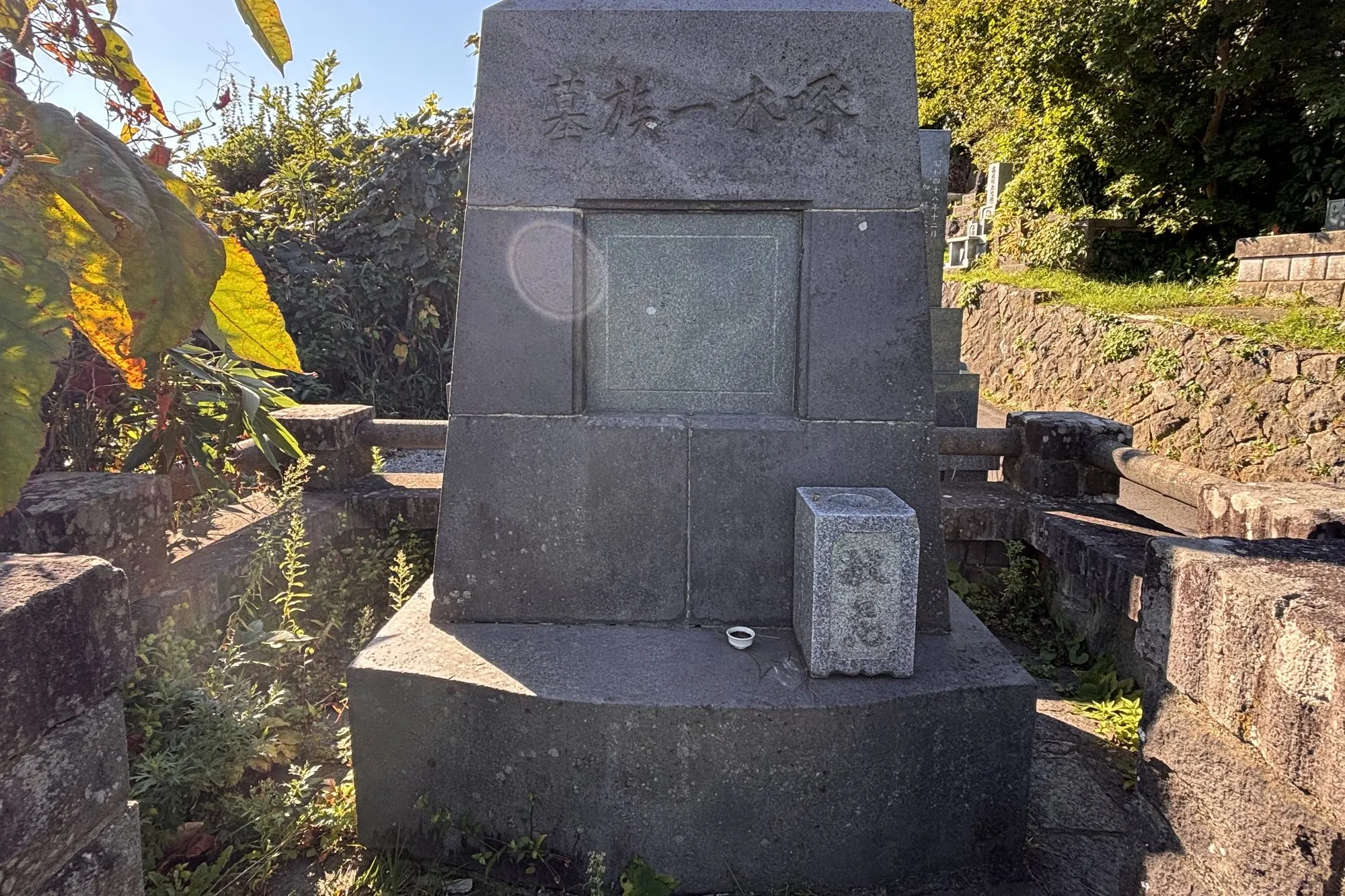
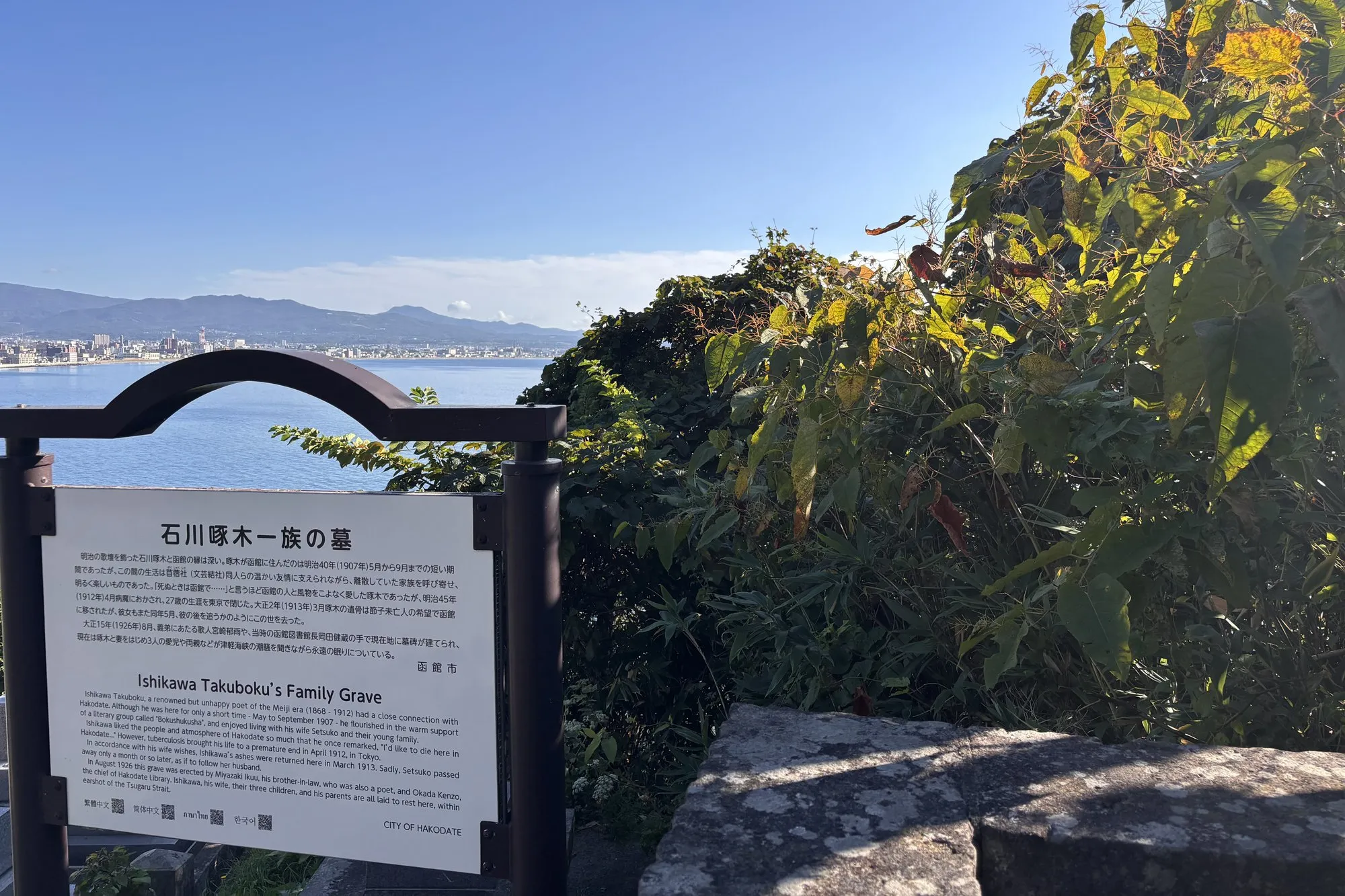
Tachimachi Cape. His grave is at the southern tip of the Hakodate peninsula, in a small cemetery on the cliff above the sea. A first stone was raised in 1913, the year after he died; the one there now was built in 1926 by his patron Ikuu Miyazaki and others. The Miyazaki family plot is beside it. The opening poem of A Handful of Sand — the one about the crab — is carved on the front.
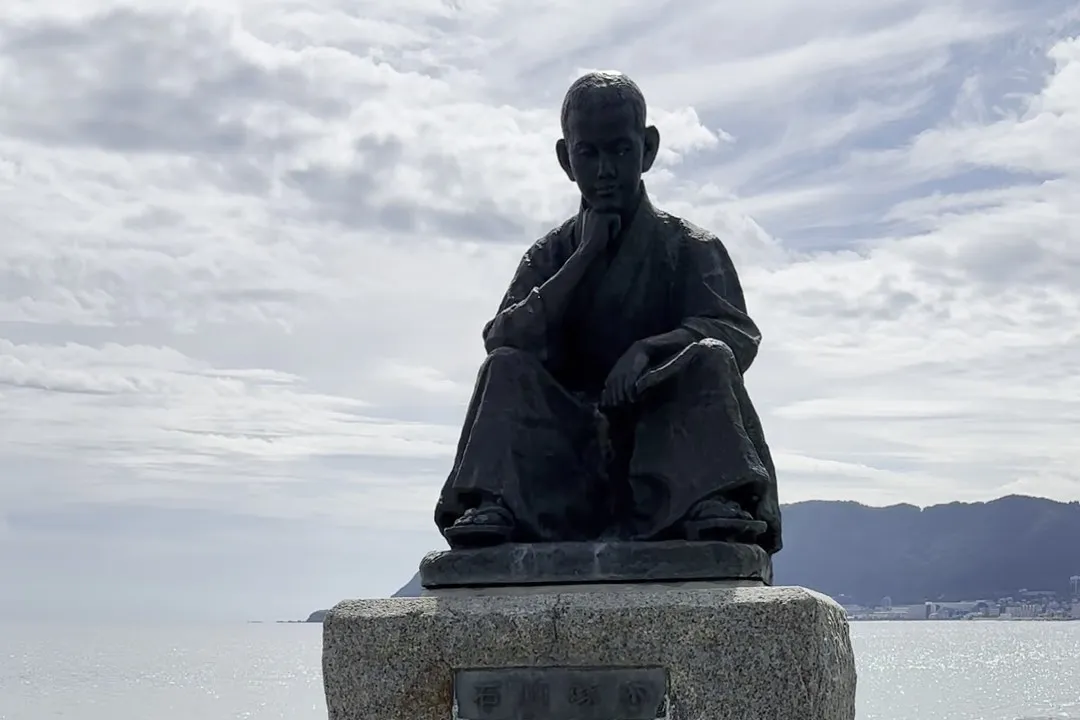
Ōmori Beach. On the eastern side of the peninsula. There is a bronze of him here, sitting cross-legged with his chin in his right hand, looking slightly down. He faces northeast, along the shoreline. Mount Hakodate is behind him. So is Aoyagi-chō. He is not looking at the city he wrote about.
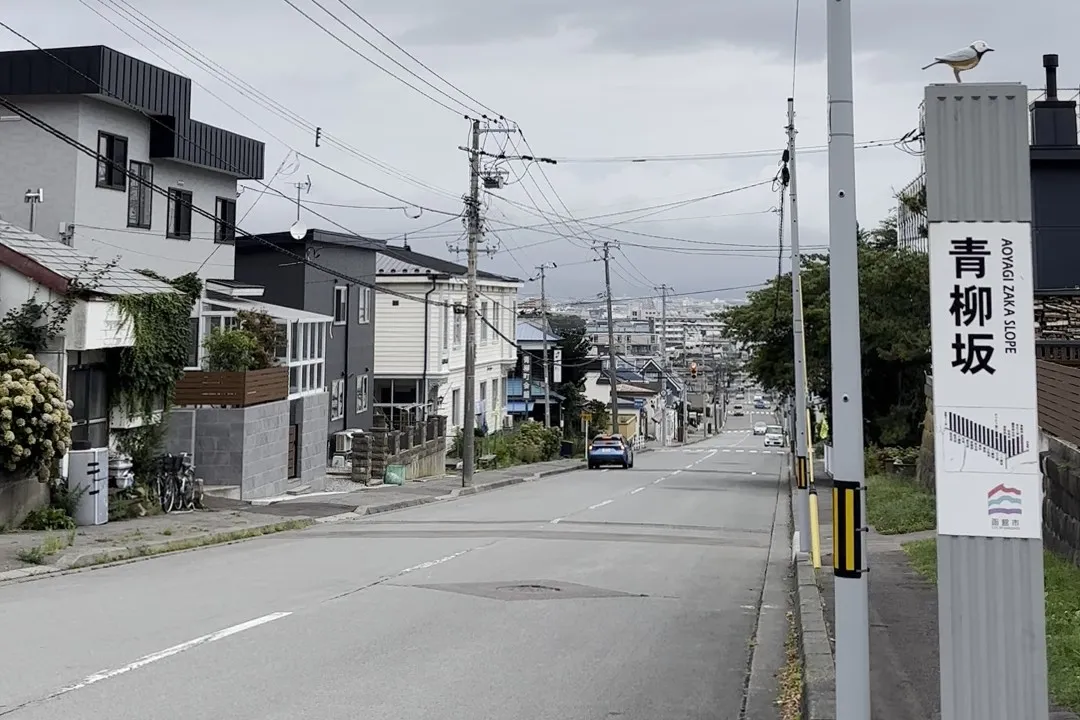
Aoyagi-chō. The neighbourhood is still called that. There is a slope named after him, and the poem is carved on a stone in Hakodate Park. The house is gone.
Why I made this
I live in Yachigashira, a few minutes’ walk from Aoyagi-chō. I pass the slope with his name on it. From Tachimachi Cape you can see the whole city; from Ōmori Beach on the other side, Aoyagi-chō is somewhere behind your shoulder.
Takuboku played the violin. Two months before the strike that ended his teaching career, he played it at his school’s graduation ceremony, for children he was about to leave behind. I have had a violin in my life since I was small. That is the detail that made me want to write something for him.
I came to Hakodate, was taken by it, and wrote and recorded this piece within three months, while the feeling was still new. In that time I have also watched my circle of friends here grow — the same thing that happened to him, in the same city, a hundred and nineteen years earlier.
I hope the fire never comes again. The rest of it I am living through, alongside his 132 days.
There is another figure in this city connected to the violin. That story will come with its own piece.
The song
Aoyagi Woodpecker is 132 measures long. One for each day he was here.
Measure 113 is August 25 — the fire. A bell, and then everything after it is different. Nineteen measures remain, which is how many days he had left in the city.
The tanka has thirty-one syllables. One beat each. That count became the groove the whole piece sits on.
His pen name means woodpecker. There is a bird in the introduction.
One more thing
He kept his diary in romanized Japanese so his wife could not read it.
The novelist Hisashi Inoue — one of the most widely read Japanese writers of the twentieth century, and a lifelong admirer — once listed what Takuboku was: a liar, a spoiled child, a king of debt, a wrecker of his own household, a womanizer, a clown, a coward, a fraud, an ingrate, a lazy man who did nothing but keep a diary. Then Inoue said that Takuboku was one of the five finest users of the Japanese language in its history.
Both halves of that are true. The second one depends on the first.